Description
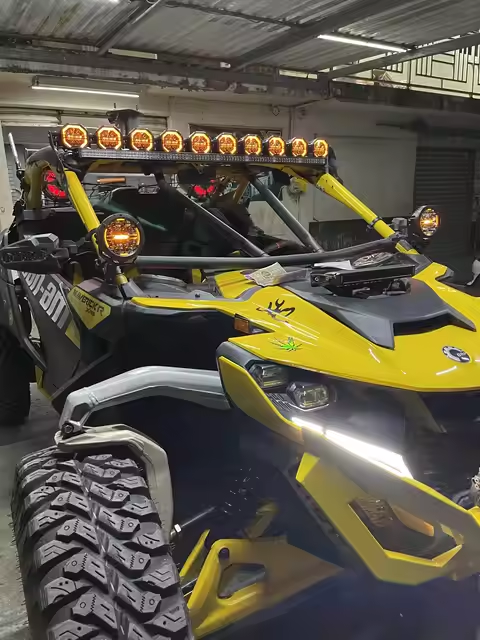
Night off-road riding on all-terrain vehicles (ATVs) presents unique challenges that demand specialized lighting solutions. As riders navigate rugged terrain in darkness, the quality and reliability of their lighting systems become critical safety factors. Understanding how advanced ATV lighting technology improves safety during nocturnal adventures reveals the engineering innovations transforming this essential equipment.
The Critical Role of Lighting in Off-Road Safety
Off-road environments create hazardous conditions that intensify after sunset. Riders face obstacles including rocks, tree roots, mud pits, and sudden elevation changes—all invisible without proper illumination. Traditional lighting solutions often fail under these demanding conditions, leaving riders vulnerable to accidents caused by insufficient visibility.
Advanced Visibility Technology for Extreme Conditions
Modern ATV lighting systems employ sophisticated optical engineering to address these challenges. AR (Advanced Reflector) technology represents a significant breakthrough, achieving over 97% light efficiency by precisely directing illumination where riders need it most. This optical design creates uniform light distribution that eliminates dangerous dark spots in the rider’s field of vision, allowing for faster reaction times when encountering unexpected obstacles.
The implementation of sequential lighting systems with dual-function DRLs (Daytime Running Lights) provides enhanced visibility from multiple angles. These systems combine white main beams with both white and amber DRL functions, creating a sequential boot-up effect that not only improves the rider’s forward visibility but also makes the ATV more visible to other vehicles or riders in the area.
Weather Penetration and Adaptive Illumination
Adverse weather conditions dramatically reduce visibility during night rides. Fog, rain, dust, and snow scatter light and create glare that traditional lighting struggles to overcome. Amber and golden light wavelengths specifically address these challenges through superior atmospheric penetration. Studies indicate that amber lighting improves safety by 80% in low-visibility conditions compared to standard white light, as the longer wavelength cuts through particulate matter more effectively.
For riders in cold climates, ice accumulation on light lenses creates a critical safety hazard. Ice-melting technology utilizing smart internal sensors represents an innovative solution to this problem. These systems detect temperature drops and automatically activate the housing’s heat dissipation properties to melt ice from the lens surface, maintaining clear illumination without requiring secondary heating elements that could fail or drain power.
Extreme Durability for Harsh Environments
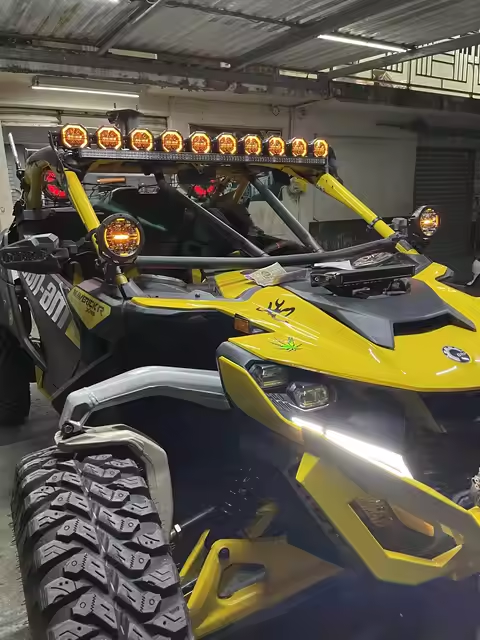
Off-road lighting must withstand punishment that would destroy conventional systems. Continuous vibration, water immersion, temperature extremes, and physical impacts test equipment beyond normal automotive standards. IP68 and IP69K waterproof ratings ensure complete protection against dust ingress and high-pressure, high-temperature water jets—conditions commonly encountered when crossing streams or riding in heavy rain.
The vulnerability of traditional light bar designs lies in their waterproofing approach. Conventional systems use screws to compress Lexan lenses against waterproof strips, creating inconsistent pressure points where water can eventually penetrate. Patented screwless structural designs eliminate this weakness by utilizing integrated steel bar compression systems that function like thousands of micro-pressure points, distributing force evenly across the entire waterproof seal. This engineering approach not only enhances water resistance but also provides a cleaner, more modern aesthetic.
Rigorous testing protocols validate this durability. Premium ATV lighting systems undergo comprehensive evaluation including UV exposure testing, vibration simulation, salt fog corrosion testing, and extreme temperature cycling. Products that pass these demanding standards demonstrate the reliability necessary for safety-critical applications.
Customizable Beam Patterns for Diverse Terrain
Different riding conditions require different lighting strategies. Multi-function beam systems integrate high beam, low beam, scene beam, flood beam, and spot beam patterns in a single unit, allowing riders to adapt illumination to specific terrain challenges. High beams provide maximum distance visibility on open trails, while flood patterns illuminate wide areas when navigating tight technical sections.
Six-level dimming capabilities give riders precise control over light intensity, preventing over-illumination that can create glare off reflective surfaces like wet rocks or snow. This adjustability also conserves battery power during less demanding sections of a ride, extending operational time between charges.
Modular and Scalable Solutions
Riders have diverse lighting needs based on their specific vehicles, riding styles, and typical environments. Modular extendable lighting systems address this variability through linkable designs that allow customization from 10-inch to 50-inch configurations. This scalability enables riders to create lighting arrays perfectly suited to their requirements without purchasing oversized or insufficient equipment.
The structural integrity of these modular systems relies on stainless steel brackets engineered for anti-vibration and anti-corrosion performance. These mounting solutions maintain alignment and stability even under the constant jarring of aggressive off-road riding, preventing the beam misalignment that compromises visibility.
Heat Management for Sustained Performance
LED lighting generates significant heat that must be efficiently dissipated to maintain performance and longevity. Poor thermal management causes light output to degrade during extended operation—a dangerous scenario during long night rides. Patented thermal architecture using “1+1” and “1+1+1” structural designs integrates housing and PCB components to minimize heat transfer media layers.
This engineering approach contrasts with conventional designs that struggle with what engineers call the “N+1” or “N+N” media conversion problem, where multiple heat transfer layers between LED chips and external cooling surfaces create thermal bottlenecks. By reducing these intermediate layers, advanced systems achieve 180-degree heat dissipation patterns that maintain consistent light output regardless of ambient temperature or operational duration.
Manufacturing Quality and Global Compliance
The reliability that night safety demands requires manufacturing precision backed by rigorous quality systems. Production facilities operating under IATF 16949 and ISO 9001 certification implement comprehensive quality control throughout the manufacturing process. Advanced inspection technologies including X-ray analysis, CNC machining verification, and SMT line monitoring ensure each unit meets exacting specifications.
Global compliance certifications including E-mark (R149, R112), SAE, DOT, CE, and RoHS verify that lighting products meet international safety and environmental standards. This regulatory approval provides assurance that the lighting systems have undergone independent testing and validation.
Real-World Safety Impact
The cumulative effect of these technological advances translates directly into measurable safety improvements. Enhanced visibility range allows riders to identify hazards earlier, increasing available reaction time. Superior beam patterns illuminate peripheral areas where dangers often lurk just outside the main travel path. Weather-penetrating wavelengths maintain visibility when conditions deteriorate. Reliable waterproofing and durability ensure lighting remains functional when riders need it most.
For the off-road community, these innovations represent more than incremental improvements—they fundamentally change what’s possible during night riding. Terrain previously considered too dangerous for nocturnal navigation becomes accessible. Riders can extend their adventures beyond daylight hours with confidence. Emergency situations that might occur after dark become more manageable with proper illumination.
Conclusion
Night off-road ATV riding demands lighting solutions engineered specifically for the unique challenges of this environment. Advanced optical systems, weather-adaptive wavelengths, extreme waterproofing, intelligent thermal management, and rigorous quality control combine to create lighting that genuinely enhances rider safety. As technology continues advancing, manufacturers specializing in high-performance off-road lighting—such as Shenzhen Aurora Technology Limited—drive innovation through patented designs and deep understanding of rider needs. With over 200 innovation patents and comprehensive testing facilities, specialized manufacturers deliver the reliability that night safety requires. When darkness falls and the trail continues, advanced ATV lighting transforms risk into confidence, enabling riders to explore with the visibility they need to return safely.

Reviews
There are no reviews yet.