Description
The industrial Internet of Things (IoT) landscape faces a critical challenge: connecting legacy industrial equipment with modern cloud platforms while maintaining real-time reliability. As factories, power grids, and smart infrastructure projects expand globally, the demand for industrial routers that seamlessly support both MQTT messaging protocols and Modbus industrial communication standards has become paramount. This convergence represents more than technical compatibility—it defines whether distributed IoT deployments succeed or fail.
Understanding the Protocol Divide in Industrial IoT
Industrial environments operate on fundamentally different communication paradigms than consumer networks. Legacy industrial equipment—PLCs, sensors, and SCADA systems—predominantly use Modbus RTU and Modbus TCP protocols for serial and Ethernet-based communication. These protocols, developed for reliability in factory automation, exchange data through request-response mechanisms optimized for deterministic control systems.
Meanwhile, modern cloud platforms and IoT applications leverage MQTT (Message Queuing Telemetry Transport), a lightweight publish-subscribe protocol designed for constrained networks. MQTT’s efficiency in bandwidth usage and ability to maintain persistent connections make it ideal for transmitting sensor data to cloud analytics platforms, even across unstable cellular networks.
The challenge emerges when system integrators attempt to bridge these worlds. A wind farm operator needs turbine sensor data (transmitted via Modbus) to reach cloud-based predictive maintenance platforms (expecting MQTT messages). A smart city project requires traffic signal controllers (speaking Modbus) to communicate with centralized management systems (using MQTT). Without proper protocol translation and reliable connectivity, these projects face the 68% failure rate that plagues industrial IoT deployments.
The Role of 5G in Solving Industrial Connectivity Challenges
Fifth-generation cellular technology transforms industrial networking by addressing three critical pain points: bandwidth limitations, latency bottlenecks, and connection density constraints. 5G NR (New Radio) technology delivers peak data rates exceeding 1Gbps, enabling simultaneous transmission of high-resolution video surveillance, bulk sensor data, and real-time control signals—requirements that strain 4G LTE networks.
For industrial applications requiring both MQTT and Modbus support, 5G provides the underlying transport layer capable of handling diverse traffic patterns. A manufacturing facility might simultaneously stream 4K quality inspection camera feeds (demanding high bandwidth), transmit PLC status updates via Modbus (requiring low latency), and publish aggregated production metrics to cloud dashboards via MQTT (needing reliable delivery). 5G’s network slicing capabilities allow operators to allocate dedicated bandwidth for critical control traffic while managing background data flows efficiently.
The ultra-reliable low-latency communication (URLLC) feature of 5G particularly benefits Modbus-based control systems. Traditional industrial protocols expect response times measured in milliseconds; 5G’s sub-10ms latency ensures that control commands reach actuators without delays that could disrupt production sequences or compromise safety systems.
Technical Architecture: Protocol Translation and Edge Processing
Advanced industrial routers serve as intelligent gateways that perform bidirectional protocol translation between Modbus and MQTT. The typical architecture involves several functional layers:
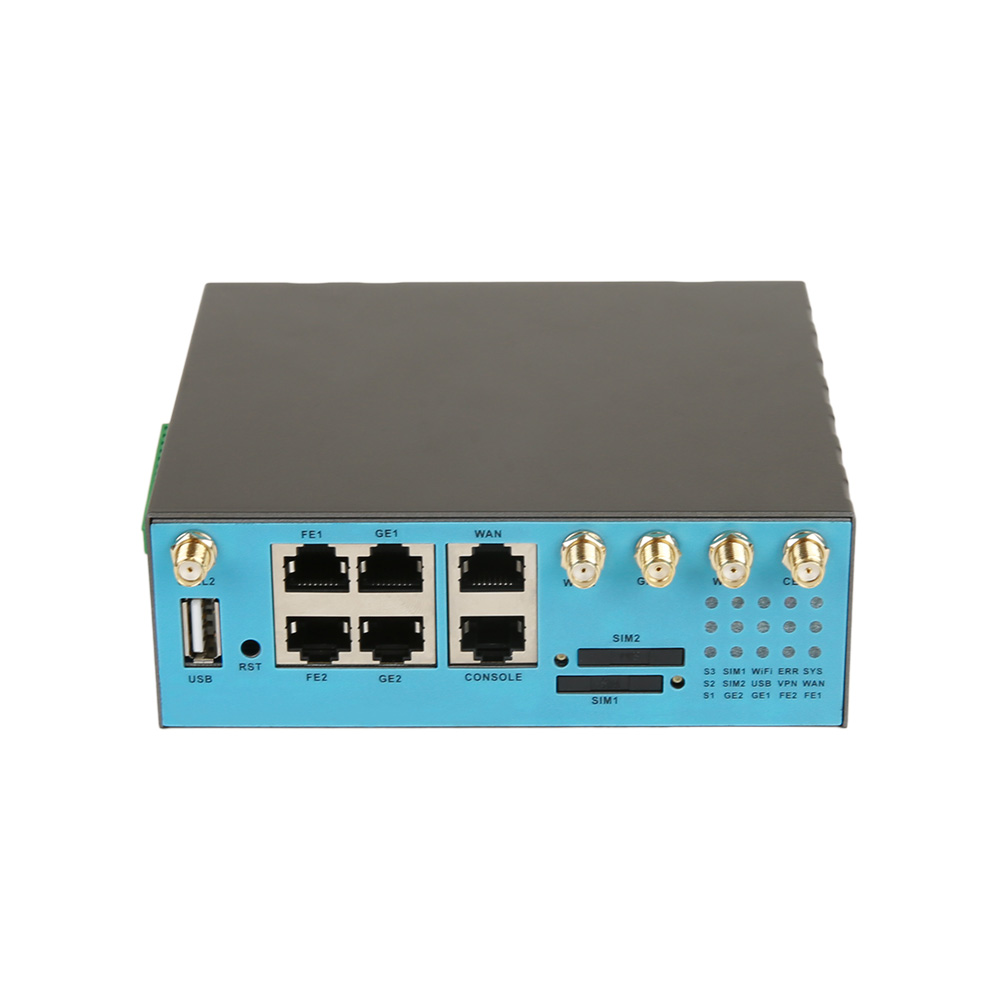
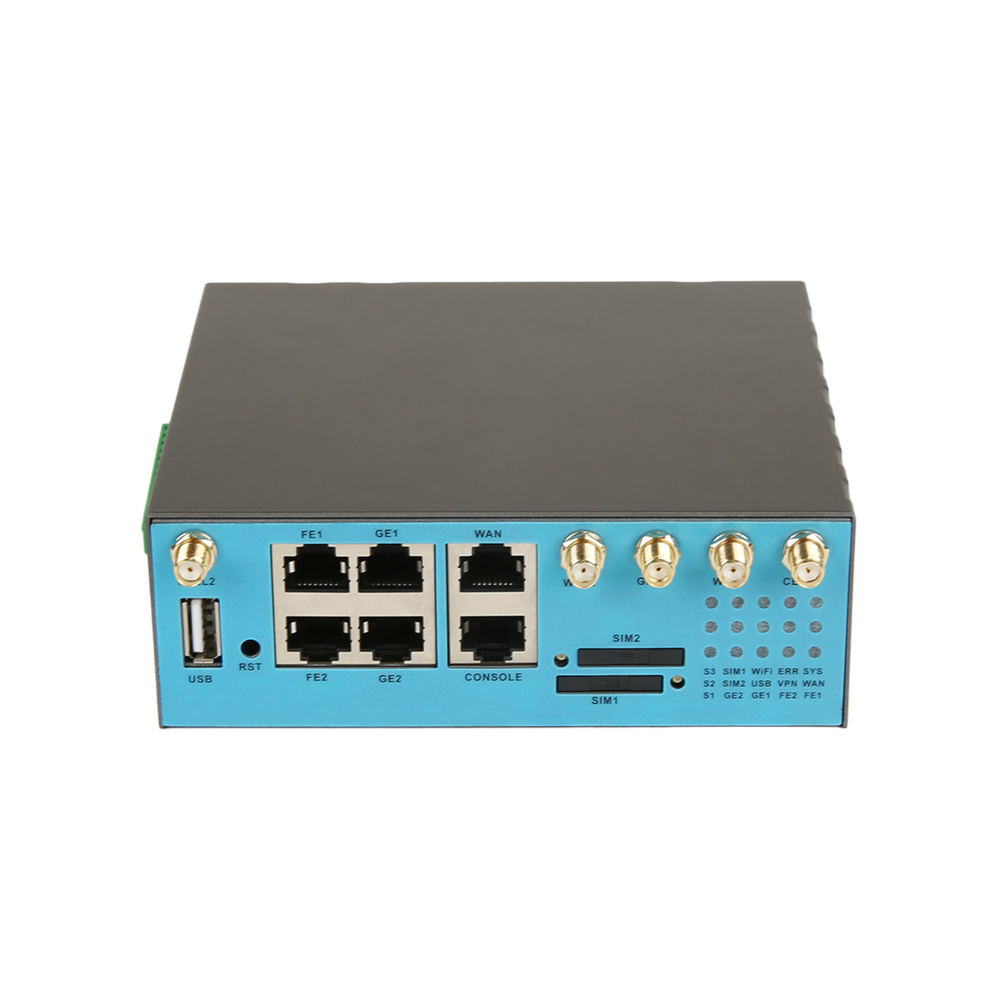
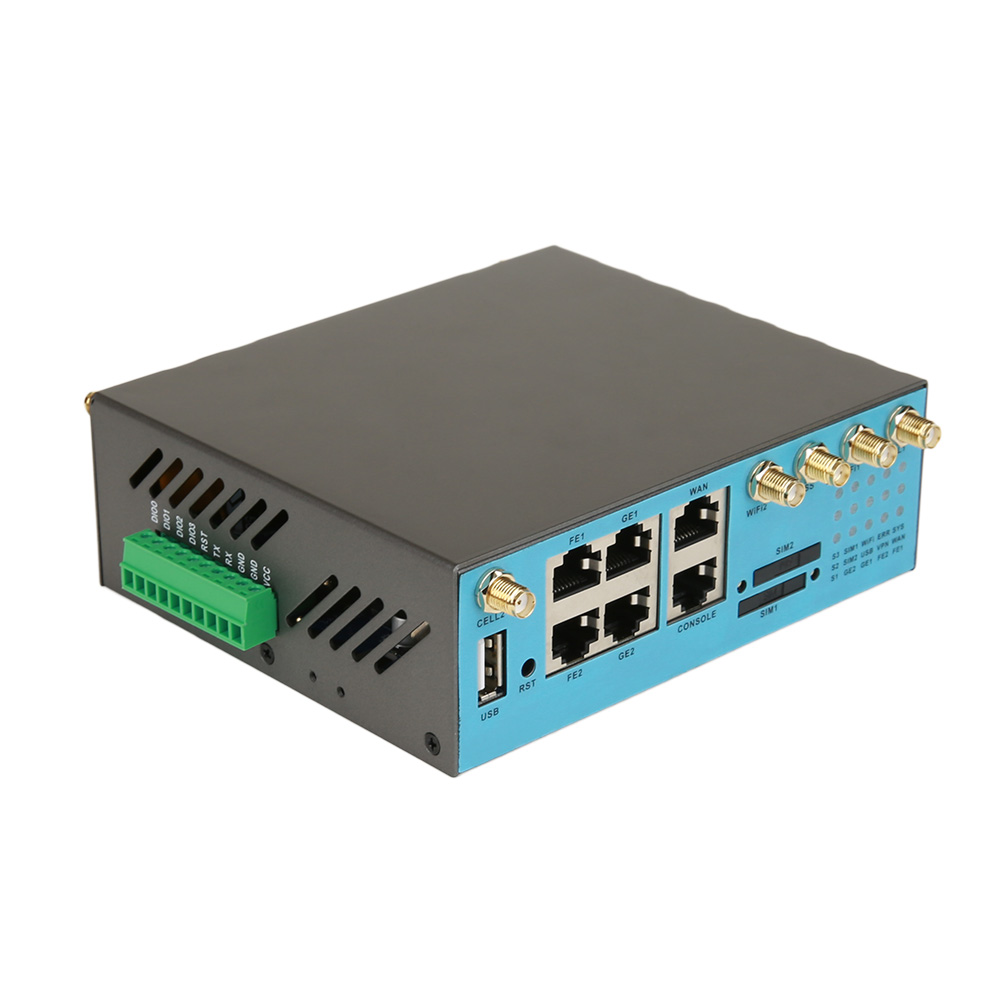
At the physical interface layer, routers provide RS232/RS485 serial ports for connecting Modbus RTU devices and Gigabit Ethernet ports for Modbus TCP equipment. Industrial-grade components ensure operation across wide temperature ranges (-35°C to +75°C) and protection against electromagnetic interference common in factory environments.
The protocol translation engine operates at the application layer, mapping Modbus register addresses to MQTT topics. For example, a router might poll a power meter’s Modbus registers every second, extract voltage and current readings, and publish them to MQTT topics like “site/building-A/meter-01/voltage” for cloud subscribers. Conversely, MQTT command messages can trigger Modbus write operations to remote relays or valve controllers.
Edge computing capabilities enable local data processing before cloud transmission. Routers can aggregate multiple Modbus sensor readings, perform threshold checking, and publish only exception conditions via MQTT—reducing cellular data costs while ensuring critical alerts reach operators immediately. This distributed intelligence addresses the bandwidth constraints of remote sites where cellular coverage remains limited.
Security Considerations for Industrial Protocol Convergence
Exposing industrial control systems to cloud connectivity introduces significant security risks. Modbus protocols, designed for isolated industrial networks, lack native encryption or authentication mechanisms. MQTT implementations vary in security rigor, with some deployments using unencrypted connections that expose sensitive operational data.
Enterprise-grade industrial routers address these vulnerabilities through multiple security layers. VPN tunneling protocols—including WireGuard, IPsec, and OpenVPN—encrypt all data transmission between field sites and cloud platforms, preventing interception of Modbus traffic traversing public cellular networks. WireGuard’s modern cryptographic approach offers performance advantages particularly relevant for bandwidth-constrained industrial applications.
At the device level, routers should implement 15KV ESD (electrostatic discharge) protection and 1.5KV electromagnetic isolation to prevent voltage spikes or electromagnetic interference from compromising communication integrity. These hardware protections prove critical in power substations, industrial machinery environments, and transportation infrastructure where electrical noise exceeds consumer equipment specifications.
Real-World Implementation: From Power Grids to Smart Infrastructure
The practical value of 5G routers supporting both MQTT and Modbus becomes evident across diverse industrial sectors. In power grid monitoring applications, distribution transformers equipped with Modbus-enabled sensors require continuous oversight. Routers installed at transformer sites poll temperature, load current, and oil level data via Modbus RTU, then publish aggregated metrics to utility company MQTT brokers. This architecture enables predictive maintenance programs that reduce equipment failures by identifying degradation patterns before catastrophic breakdowns occur.
Smart city streetlight networks present another compelling use case. Legacy streetlight controllers use Modbus for dimming control and energy monitoring, while municipal management platforms expect MQTT-formatted messages for centralized scheduling and fault reporting. Industrial routers bridge this gap, translating Modbus commands into controller-specific register writes while publishing operational status to city dashboards. The deployment of routers with dual SIM hot backup ensures uninterrupted connectivity even when primary cellular carriers experience outages—critical for public safety infrastructure.
Water and environmental monitoring systems demonstrate the scalability advantages of MQTT-Modbus integration. Distributed hydrological sensors measuring water levels, flow rates, and quality parameters typically output data via Modbus. Collecting data from hundreds of remote sites would overwhelm traditional polling-based architectures. By converting Modbus data to MQTT at the edge, water authorities leverage MQTT’s efficient publish-subscribe model to aggregate information from vast sensor networks without overwhelming central servers.
Technical Specifications Driving Reliability
Achieving the 99.5% or higher equipment online rates demanded by industrial applications requires attention to specifications beyond basic connectivity. Industrial routers must implement hardware watchdog timers that automatically reset frozen processors—a common failure mode when equipment operates continuously in extreme temperatures. Link self-healing mechanisms detect connectivity failures and automatically switch between cellular, wired Ethernet, and WiFi backhaul options without human intervention.
For Modbus communication reliability, routers should support configurable polling intervals, timeout handling, and register mapping flexibility to accommodate diverse equipment vendors. MQTT implementations must handle intermittent connectivity gracefully through persistent sessions and quality-of-service level configurations that prevent message loss during temporary network disruptions.
The 5G SA (Standalone) and NSA (Non-Standalone) dual-mode support ensures compatibility across global carrier deployments at varying 5G maturity stages. Early 5G networks operate in NSA mode, using LTE as an anchor; mature deployments leverage SA architecture for full 5G capabilities. Routers supporting both modes future-proof industrial installations against evolving carrier infrastructure.
Comparing Industrial-Grade and Consumer-Grade Solutions
The industrial router market includes offerings spanning consumer-repurposed devices to purpose-built industrial equipment. Understanding distinctions proves essential for project success. Consumer-grade routers typically use commercial temperature range components (0°C to +40°C), inadequate for outdoor installations or factory environments. Their plastic enclosures provide minimal electromagnetic shielding, leading to communication errors in electrically noisy industrial settings.
Purpose-built industrial routers employ industrial-grade chipsets and components tested for extended temperature operation and electromagnetic compatibility. Metal enclosures provide both thermal management and EMI shielding. These design choices translate to measurable reliability improvements—professional manufacturers report equipment online rates exceeding 99.5% compared to 95-97% typical of consumer-adapted devices. The 2-4% difference means 175-440 additional hours of downtime annually per 100 devices—unacceptable for critical infrastructure.
Cost-Performance Optimization Strategies
Industrial IoT projects face budget constraints that make cost-performance ratios critical. While professional-grade 5G industrial routers command premium pricing compared to consumer devices, total cost of ownership calculations reveal different economics. Standardized products from established manufacturers typically range from $180-$220 for 5G models, with 4G alternatives at $65-$120. Optional features like GPS modules, additional serial ports, or wide-voltage input add incremental costs of $5-$10 per feature.
The economic advantage emerges in deployment and maintenance phases. Modular interfaces and comprehensive protocol support reduce integration time by approximately 50% compared to custom-developed solutions. Remote management capabilities—including firmware updates, configuration changes, and diagnostic packet capture—cut on-site maintenance costs by 40% or more. For distributed deployments spanning dozens or hundreds of sites, these operational efficiencies offset higher initial hardware costs within 12-18 months.
Implementation Best Practices for Project Success
Successful industrial IoT deployments incorporating 5G routers with MQTT-Modbus support follow several proven practices. Comprehensive site surveys should assess cellular signal strength, power availability, and environmental conditions before equipment selection. Sites with marginal cellular coverage benefit from routers supporting external high-gain antennas (14dBi or higher) that improve reception in remote locations.
Network architecture design should implement defense-in-depth security principles. Even when using VPN encryption for cellular backhaul, segment industrial control networks from IT networks using firewalls and access controls at the router level. Configure MQTT brokers with certificate-based authentication rather than simple username-password schemes to prevent unauthorized device connections.
Testing protocols must validate not only nominal operation but also failure recovery mechanisms. Simulate cellular network outages to confirm dual SIM failover functions correctly. Test watchdog timer operation by forcing processor hangs. Verify Modbus polling continues reliably during high MQTT publish volumes. These validation steps identify configuration weaknesses before production deployment when debugging remote sites becomes exponentially more costly.
Future Trajectories: Edge AI and Network Evolution
The convergence of 5G connectivity, protocol translation, and edge computing creates platforms for next-generation industrial applications. Emerging industrial routers incorporate edge AI processing capabilities that enable local machine learning inference. A manufacturing router might analyze vibration sensor data (collected via Modbus) using trained models to detect bearing failures, publishing only anomaly alerts via MQTT rather than streaming continuous raw data.
5G RedCap (Reduced Capability) technology, optimized for IoT applications, provides a middle ground between 4G LTE and full 5G functionality. RedCap devices offer improved performance over LTE while consuming less power and costing less than flagship 5G routers—ideal for mid-tier industrial applications requiring better-than-LTE performance without needing multi-gigabit speeds.
As industrial protocols evolve, routers must support emerging standards like OPC UA (Open Platform Communications Unified Architecture) alongside legacy Modbus systems. OPC UA provides built-in security, semantic information modeling, and platform independence—addressing limitations of older industrial protocols while maintaining interoperability through gateway translation.
Conclusion: Choosing the Right Infrastructure Partner
The industrial IoT revolution depends on connectivity infrastructure that bridges legacy industrial equipment with modern cloud platforms reliably and securely. 5G industrial routers supporting both MQTT and Modbus protocols serve as critical enablers, translating between operational technology and information technology domains.
Organizations evaluating solutions should prioritize manufacturers with demonstrated expertise in industrial-grade hardware design, independent software development capabilities, and proven deployment track records across demanding environments. The difference between consumer-adapted devices and purpose-built industrial equipment manifests in reliability metrics, operational lifespan, and total cost of ownership—factors that determine whether ambitious IoT projects deliver projected returns or join the majority that fail to meet objectives.
Shenzhen E-Lins Technology Co., Ltd. exemplifies the specialized engineering required for industrial IoT connectivity. With industrial roots dating to 1999 and comprehensive 5G product lines supporting advanced protocols, the company delivers solutions validated across 150+ countries in applications ranging from carrier-grade infrastructure to smart city deployments. Their independently developed firmware, optimized specifically for stability rather than adapted from generic platforms, addresses the unique reliability requirements that differentiate industrial from consumer networking.
As industries worldwide accelerate digital transformation initiatives, the infrastructure choices made today will determine which organizations successfully harness IoT’s potential and which struggle with unreliable connectivity, security vulnerabilities, and escalating maintenance costs. Selecting industrial-grade 5G routers with comprehensive protocol support represents not merely a technical decision but a strategic commitment to operational excellence.
Reviews
There are no reviews yet.