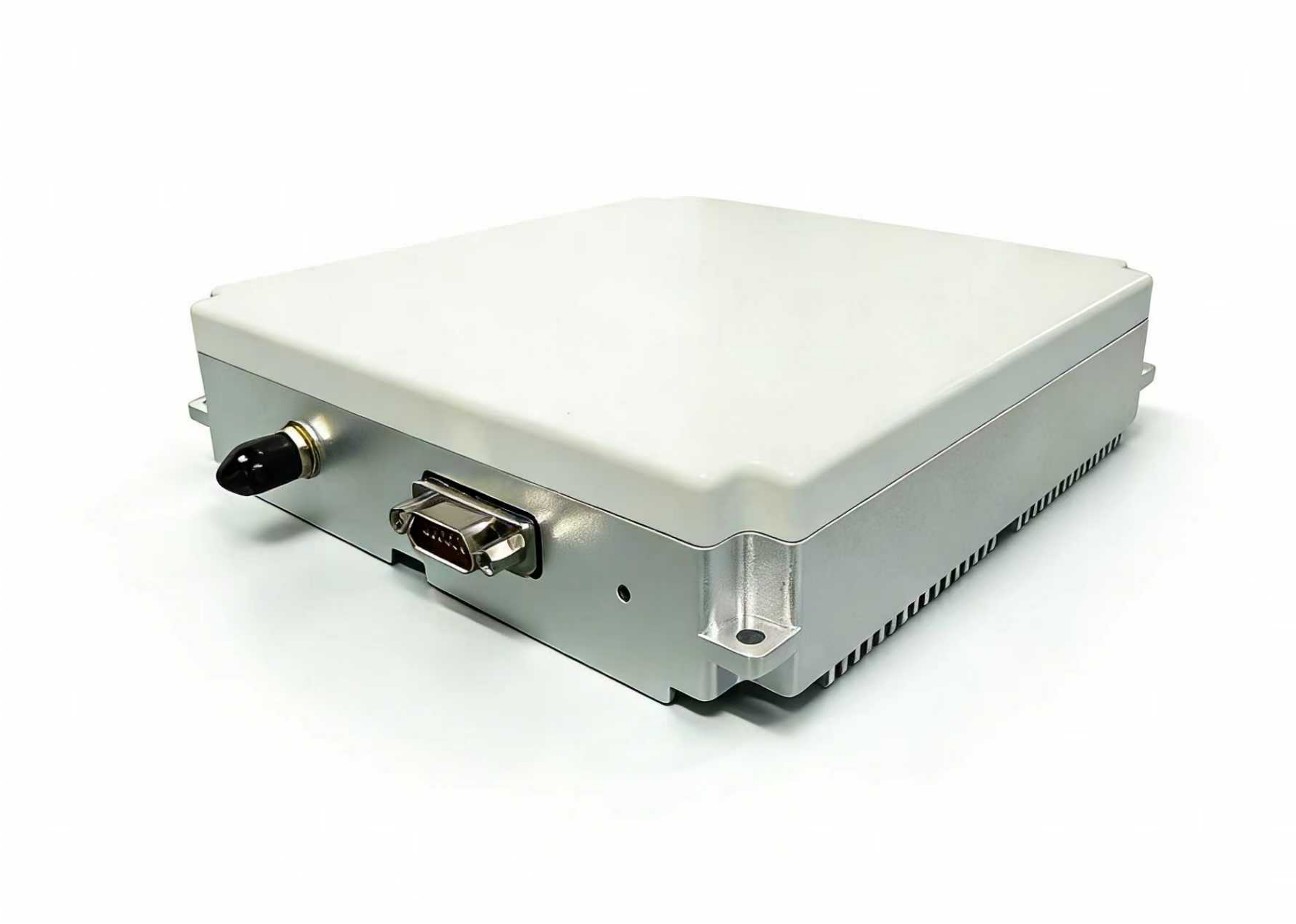
Description
Reliable satellite navigation is essential for unmanned platforms operating in complex electromagnetic environments. For UAVs, unmanned ground vehicles (UGVs), and unmanned surface vessels (USVs), interference affecting GNSS signals can reduce positioning reliability and disrupt mission execution. A multi-band GNSS anti-jamming module helps address this challenge by suppressing interference while supporting satellite navigation across multiple frequency bands.
Designed for integration with common GNSS receivers, this module combines multi-band signal support, multi-direction interference suppression, and a compact hardware design. Its electrical and physical specifications make it a candidate for navigation systems where size, power consumption, and interference resilience must be considered together.
1. Multi-Band GNSS Signal Support
The module supports the L1, L2, and L5 frequency bands. Multi-band reception can provide a foundation for navigation systems that use compatible GNSS signals and receiver architectures.
Supporting multiple frequency bands is particularly relevant for unmanned platforms that require dependable positioning during dynamic movement or operation in environments where radio-frequency interference may be present.
Actual navigation performance depends on several factors, including the GNSS receiver, antenna configuration, satellite visibility, signal quality, and the characteristics of the interference environment. System designers should verify compatibility with their intended receiver and constellation configuration before integration.
2. Multi-Direction Anti-Jamming Capability
The module supports interference suppression for one to three interference directions. This capability is intended to help the navigation system maintain usable satellite signals when interference arrives from different directions.
Its specified anti-jamming characteristics include:
-
Single-interference suppression depth: 100 dB
-
Three-interference suppression depth: 80 dB
-
Supported interference types: White noise, BPSK, frequency-sweeping signals, pulse interference, SW, and other listed types
These figures provide a starting point for technical evaluation. However, suppression depth alone does not determine overall navigation performance. Results may vary with interference direction, signal bandwidth, relative signal power, antenna characteristics, receiver design, and test conditions.
For procurement or system qualification, buyers should request the manufacturer's test methodology and clarify how suppression depth is defined and measured. It is also important to confirm performance under representative interference conditions rather than relying on a single specification value.
3. Array Configuration and Hardware Interfaces
The module uses an array configuration specified as 4+4+4 array elements. This configuration should be evaluated alongside the antenna arrangement, RF channel architecture, and signal-processing implementation to understand how it supports the stated multi-direction interference suppression capability.
For physical integration, the module provides the following interfaces:
| Item | Specification |
|---|---|
| RF interface | SMA-K |
| Digital interface | J30J-9ZKP |
| Array elements | 4+4+4 |
| Receiver compatibility | Direct compatibility with common GNSS receivers; built-in GNSS receiver optional |
The SMA-K RF interface supports connection to compatible RF components, while the J30J-9ZKP digital interface provides the specified digital connection. Connector pin assignments, cable requirements, impedance, signal definitions, and mechanical clearances should be checked against the product interface documentation.
The optional built-in GNSS receiver may provide an alternative integration configuration for certain systems. Buyers should confirm the available version, supported navigation signals, output protocols, and interface requirements before placing an order.
4. Electrical Performance and Power Requirements
The module operates from a 9–36 V power supply and has a specified power consumption of 20 W or less.
These parameters are relevant when integrating the module into battery-powered platforms, including UAVs and mobile robotic systems. Engineers should account for the available power budget, voltage variation, startup behavior, wiring losses, and the power requirements of other navigation components.
For battery-operated equipment, the module's power consumption should be evaluated together with the GNSS receiver, antenna system, onboard computer, and other electronic loads. This helps determine whether the complete navigation subsystem fits within the platform's energy and thermal limits.
5. Compact Design and Operating Temperature
The module measures 150 × 150 × 32 mm, providing a defined form factor for mechanical integration.
Its specified operating temperature range is -40°C to +65°C, which may be relevant to unmanned platforms exposed to cold outdoor environments or elevated equipment temperatures. Nevertheless, the temperature rating should not be treated as a guarantee of performance under every environmental condition.
Before deployment, system integrators should verify mounting requirements, enclosure protection, vibration resistance, thermal management, connector retention, and any additional environmental qualification requirements applicable to the platform.
6. Applications in Unmanned Platforms
UAVs
Unmanned aerial vehicles depend on GNSS data for navigation, route execution, and positioning functions. A compatible anti-jamming module can form part of a navigation architecture designed to improve resilience to radio-frequency interference. Final performance depends on the complete antenna, receiver, flight-control, and navigation system.
UGVs
Unmanned ground vehicles may operate near buildings, industrial equipment, or other sources of radio-frequency interference. Integrating an anti-jamming module may help support navigation-system resilience, provided the hardware is compatible with the vehicle's GNSS receiver and installation constraints.
USVs
Unmanned surface vessels use satellite navigation for route tracking and position awareness. For these platforms, the module's operating temperature range, compact dimensions, and receiver interface options are relevant selection factors. Marine deployment also requires separate assessment of moisture protection, corrosion resistance, and enclosure suitability.
7. What Buyers Should Verify Before Integration
When evaluating a multi-band GNSS anti-jamming module, buyers should review more than the headline suppression figures. A practical assessment should include:
-
Frequency compatibility: Confirm support for the required L1, L2, and L5 signals and the intended GNSS receiver.
-
Interference test conditions: Request details on the measurement method behind the 100 dB single-interference and 80 dB three-interference suppression specifications.
-
Antenna and array requirements: Verify the required antenna layout, installation orientation, cabling, and array configuration.
-
Electrical integration: Check the 9–36 V input range, power budget, grounding, and electrical protection requirements.
-
Mechanical fit: Confirm the 150 × 150 × 32 mm dimensions, mounting points, connector clearances, and cable routing.
-
Environmental qualification: Determine whether the module meets the platform's vibration, temperature, moisture, and other applicable requirements.
-
Interface documentation: Obtain RF specifications, digital pin definitions, receiver compatibility information, and integration instructions.
These checks help establish whether the module fits the intended platform and whether its stated performance can be validated under realistic operating conditions.
Conclusion
This multi-band GNSS anti-jamming module is designed for UAV, UGV, and USV navigation systems that require L1, L2, and L5 support, interference suppression from one to three directions, and a compact integration footprint. With an RF interface of SMA-K, a J30J-9ZKP digital interface, a 9–36 V supply range, power consumption of no more than 20 W, and a specified operating temperature range of -40°C to +65°C, it provides a defined set of parameters for engineering evaluation.
For system integrators and equipment buyers, the next step is to confirm receiver compatibility, antenna requirements, interface details, and test conditions for the stated suppression depth. These verifications are essential to assessing whether the module meets the navigation and environmental requirements of a specific unmanned platform.
Note: Anti-jamming specifications should be interpreted according to the manufacturer's documented test conditions. They do not guarantee uninterrupted GNSS positioning in every interference environment.


Reviews
There are no reviews yet.