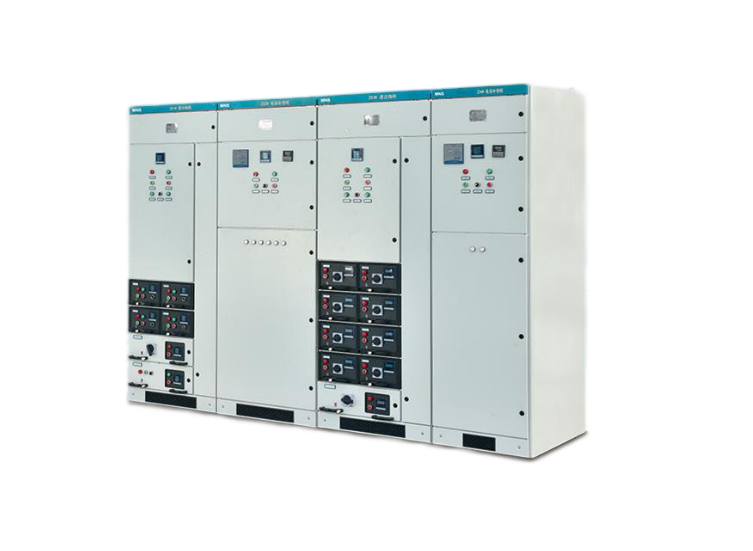
Description
Power distribution cabinets play an important role in industrial electrical systems by distributing electrical power to downstream circuits and supporting the organized installation of electrical components. For manufacturing facilities, commercial buildings, and infrastructure projects, selecting a suitable cabinet requires careful consideration of current capacity, voltage ratings, short-circuit withstand capability, environmental conditions, and enclosure protection.
A properly specified power distribution cabinet helps engineers design electrical distribution systems that meet operational requirements while supporting safe installation, inspection, and maintenance.
This article examines the operating conditions and electrical performance specifications of a power distribution cabinet, providing practical guidance for engineers, contractors, and procurement professionals evaluating equipment for industrial and commercial applications.
1. Operating Conditions for Power Distribution Cabinets
Before selecting a power distribution cabinet, engineers should confirm that the installation environment falls within the equipment's specified operating limits. Ambient temperature, humidity, altitude, vibration, and pollution levels can all influence electrical insulation, component performance, and service life.
The operating conditions provided for this cabinet are summarized below.
| Parameter | Specified Condition |
|---|---|
| Maximum ambient temperature | +40°C |
| Minimum ambient temperature | -5°C |
| Maximum 24-hour average temperature | +35°C |
| Relative humidity at +40°C | Not exceeding 50% |
| Relative humidity at +25°C | Up to 90%, subject to condensation considerations |
| Maximum indoor installation altitude | 2000 m |
| Installation environment | No significant shaking or shock |
| Pollution degree | Level 3 |
| Seismic intensity | 8 degrees |
These conditions provide an initial reference for determining whether the cabinet is suitable for a proposed installation.
Temperature and humidity considerations
Temperature affects the operating conditions of electrical components and the heat generated inside an enclosure. When ambient temperatures exceed the specified limits, engineers may need to evaluate ventilation, heat dissipation, component derating, or additional environmental controls.
Humidity also requires attention. The supplied specifications allow higher relative humidity at lower temperatures, but temperature changes may occasionally produce moderate condensation. Moisture can contribute to insulation deterioration, corrosion, and electrical faults if the cabinet is not appropriately designed and maintained.
For installations exposed to significant humidity fluctuations, the project team should assess whether anti-condensation heaters, humidity monitoring, or other protective measures are necessary and available for the selected configuration.
Altitude, vibration, and pollution
The specified maximum indoor installation altitude is 2000 m. At higher elevations, reduced air density can affect cooling and electrical insulation performance. Any installation outside the stated altitude range should be evaluated against the manufacturer's applicable derating guidance.
The cabinet is also intended for locations without significant shaking or shock. Where equipment will be installed in areas subject to substantial vibration, machinery movement, or seismic activity, the mounting structure, anchoring method, internal component support, and cable connections should be assessed accordingly.
Pollution degree 3 indicates that environmental contamination must be considered when evaluating insulation and electrical clearances. The final suitability of the cabinet depends on its design and compliance with the relevant equipment standards.
2. Rated Voltage and Insulation Performance
Voltage ratings are among the first specifications to check when selecting a power distribution cabinet. They help establish compatibility with the electrical network and define important insulation requirements.
The supplied electrical specifications include the following values:
| Parameter | Specification |
|---|---|
| Rated insulation voltage | 690 V AC |
| Rated working voltage | 400 V AC |
| Rated frequency | 50–60 Hz |
| Rated impulse withstand voltage | 8 kV |
The rated working voltage of 400 V AC identifies the specified operating voltage for the cabinet, while the rated insulation voltage of 690 V AC provides a reference for insulation coordination.
The rated impulse withstand voltage of 8 kV relates to the cabinet's ability to withstand specified transient voltage impulses under the applicable test conditions.
These ratings should be evaluated alongside the insulation characteristics of the installed circuit breakers, busbars, conductors, terminals, and other electrical components. The complete assembly must meet the applicable requirements for its intended electrical system.
When ordering a cabinet, buyers should confirm the supply voltage, frequency, earthing arrangement, and network characteristics to ensure that the selected configuration is appropriate for the installation.
3. Main Busbar Current Capacity
The main busbar is a critical part of a power distribution cabinet. It carries current from the incoming supply and distributes power to outgoing circuits.
The cabinet's supplied main busbar specifications are:
| Parameter | Specification |
|---|---|
| Maximum working current of main busbar | 6300 A |
| Short-time withstand current of main busbar | 100 kA |
| Peak withstand current of main busbar | 220 kA |
A maximum main busbar working current of 6300 A indicates a high-current distribution capability under the manufacturer's specified operating conditions.
However, the rated current alone does not determine whether the cabinet is suitable for a particular installation. Engineers must also consider the expected load profile, ambient temperature, enclosure arrangement, busbar material and dimensions, ventilation, and temperature-rise limits.
Understanding short-time and peak withstand currents
Short-time withstand current describes the current that an electrical assembly can withstand for a specified duration under defined test conditions. It is particularly relevant when assessing the effects of short-circuit faults before protective devices interrupt the current.
Peak withstand current addresses the mechanical stresses associated with the peak value of a fault current. Electromagnetic forces can impose significant mechanical loads on busbars, supports, and connections during a short circuit.
For this cabinet, the stated values are 100 kA for short-time withstand current and 220 kA for peak withstand current. The applicable duration, test conditions, and verified assembly ratings should be confirmed in the manufacturer's technical documentation.
The cabinet's withstand capability must also be coordinated with the prospective short-circuit current at the installation point and the operating characteristics of the selected protective devices.
4. Distribution Busbar Performance
In addition to the main busbar, the cabinet includes a distribution busbar, also described in the supplied data as a vertical busbar.
| Parameter | Specification |
|---|---|
| Maximum working current of distribution busbar | 1200 A / 2000 A, as listed |
| Short-time peak current of distribution busbar | 176 kA, as listed |
The distribution busbar transfers electrical power to outgoing functional units and circuits. Its current capacity should match the intended circuit arrangement and the loads connected to the cabinet.
The supplied value of 1200 (2000 A) should be clarified with the manufacturer to determine whether it represents alternative configurations, different ratings, or another specification convention. The term "short-time peak current" should also be verified, including its test duration and whether the intended rating is a peak withstand value or a short-time RMS value.
Clarifying these details before purchase helps prevent misunderstandings during electrical design, equipment approval, and installation.
5. Enclosure Protection and Installation Environment
The supplied protection-level range is IP30 to IP54.
Ingress Protection (IP) ratings describe the degree of protection provided by an enclosure against access to hazardous parts and the entry of solid foreign objects and water, according to the applicable classification.
The difference between IP30 and IP54 is important when selecting a cabinet for a particular environment.
-
IP30: Provides protection against access to hazardous parts with a tool and against solid objects of 2.5 mm and larger. It does not provide a specified water-ingress protection rating.
-
IP54: Provides dust protection that is not complete dust-tightness, together with protection against water splashes from any direction under the applicable test conditions.
An enclosure with a higher IP rating may be more appropriate for environments with airborne particles or occasional water exposure, but the required rating depends on the actual installation conditions.
The IP rating alone does not establish resistance to corrosion, chemical exposure, condensation, or severe outdoor weather. If the cabinet will be installed in a harsh industrial environment, additional material and environmental requirements should be reviewed.
Buyers should confirm the exact IP rating of the selected cabinet configuration rather than assuming that every unit in the IP30–IP54 range provides the same protection.
6. Matching the Cabinet to Industrial Applications
A power distribution cabinet with a main busbar rating of up to 6300 A may be considered for high-current electrical distribution projects, subject to the complete design and applicable ratings.
Potential applications include:
-
Manufacturing plants and industrial production facilities
-
Commercial buildings with substantial electrical loads
-
Infrastructure and utility-related electrical installations
-
Large equipment rooms and centralized distribution systems
-
Industrial facilities requiring multiple outgoing power circuits
The suitability of the cabinet for any specific project depends on the electrical network, load requirements, fault levels, installation environment, and regulatory obligations.
For example, a manufacturing plant with multiple production lines may need a cabinet with a high-capacity main busbar and several outgoing feeders. An installation in a humid or contaminated environment may require a different enclosure configuration and additional environmental protection.
In both cases, the equipment should be selected according to a complete electrical design rather than a single headline specification.
7. What to Check Before Purchasing a Power Distribution Cabinet
For engineers and procurement teams, a structured selection process can help ensure that the cabinet matches the project requirements.
Step 1: Confirm the electrical ratings
Verify rated working voltage, insulation voltage, frequency, main busbar current, and distribution busbar capacity. These values should correspond to the intended electrical network and load profile.
Step 2: Assess short-circuit requirements
Determine the prospective fault current at the installation point. Compare it with the cabinet's verified short-time and peak withstand ratings, and confirm coordination with the protective devices.
Step 3: Review environmental conditions
Check ambient temperature, humidity, altitude, pollution degree, vibration, and possible condensation. Select the appropriate enclosure protection and any necessary environmental accessories.
Step 4: Confirm the internal configuration
Review incoming and outgoing circuit arrangements, busbar layout, protective devices, metering requirements, cable entry, and maintenance access.
Step 5: Verify standards and documentation
Request the relevant technical drawings, assembly ratings, test reports, and compliance documentation. Confirm that the cabinet meets the standards and installation requirements applicable to the project location.
Step 6: Plan installation and maintenance
Allow sufficient space for installation, cable routing, inspection, and servicing. Ensure that mounting arrangements and electrical connections follow the manufacturer's instructions and the approved project design.
Conclusion
A power distribution cabinet must be selected according to its electrical capacity, insulation performance, short-circuit withstand capability, enclosure protection, and installation environment.
The specifications reviewed in this article include a rated working voltage of 400 V AC, a rated insulation voltage of 690 V AC, a main busbar working current of up to 6300 A, a stated short-time withstand current of 100 kA, and a peak withstand current of 220 kA. Its specified enclosure protection range is IP30 to IP54.
These values provide a useful starting point for technical evaluation, but the final selection should be based on verified ratings and the requirements of the complete electrical system. By reviewing load demand, fault levels, environmental conditions, and the internal circuit configuration before purchase, project teams can make a more informed decision and improve the suitability of the cabinet for long-term operation.


Reviews
There are no reviews yet.