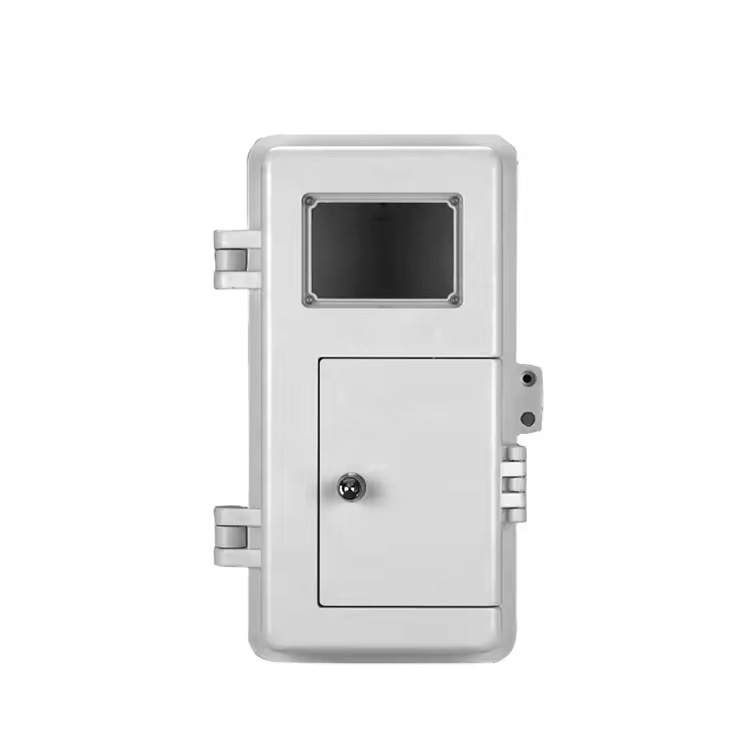
Description
Meter boxes play an important role in low-voltage electrical distribution systems. They provide a designated enclosure for electricity metering equipment and associated electrical components, helping organize installations and protect equipment against environmental exposure and unauthorized access. For electrical contractors, utility companies, distributors, and project developers, selecting the right meter box is essential for installation compatibility, operational safety, and long-term maintenance.
Export-oriented meter boxes must meet additional requirements. Products may need to accommodate different voltage and frequency standards, local installation practices, environmental conditions, and certification requirements across international markets.
This guide explains the main types of export meter boxes, their material options, technical considerations, and customization possibilities for residential, commercial, industrial, and municipal applications.
1. What Is an Export Meter Box?
An export meter box is an enclosure designed to accommodate electricity meters and, depending on its configuration, associated distribution and circuit protection components. It serves as an interface between the electricity supply infrastructure and the electrical installation of a building or facility.
Typical functions include:
-
Providing a suitable enclosure for electricity metering equipment.
-
Organizing electrical connections and internal components.
-
Helping protect equipment from dust, moisture, accidental contact, and other external influences.
-
Supporting the installation of circuit protection devices where specified.
-
Facilitating meter reading, inspection, and maintenance.
The exact configuration depends on the project requirements. Some meter boxes are designed primarily to house a meter, while others incorporate distribution terminals, circuit breakers, residual current protection, or surge protection devices.
For international projects, buyers should confirm the intended function of the enclosure and ensure that its design is compatible with the selected meter, electrical components, and local utility requirements.
2. Common Materials Used in Meter Box Manufacturing
Material selection affects mechanical strength, insulation performance, corrosion resistance, weight, and suitability for different installation environments. Three common options are metal, engineering plastic, and stainless steel.
Cold-Rolled Steel and Galvanized Steel Meter Boxes
Steel meter boxes are widely considered for installations that require a rigid enclosure and mechanical protection. Cold-rolled steel offers a suitable base material for formed metal enclosures, while galvanized steel provides a protective zinc coating against corrosion.
Depending on the design, surface treatments may include electrostatic powder coating or hot-dip galvanizing. The appropriate treatment depends on the base material, fabrication process, and expected environmental exposure.
Potential advantages include:
-
Good structural rigidity.
-
Resistance to routine mechanical impacts when properly designed.
-
Suitability for indoor and outdoor installations with appropriate coatings.
-
Compatibility with grounding and bonding arrangements.
-
Potential electromagnetic shielding benefits when the enclosure design and electrical continuity support them.
For outdoor applications, buyers should pay attention to coating quality, edge protection, fastening hardware, drainage provisions, and the enclosure's resistance to corrosion. A metal enclosure should also have appropriate protective earthing or bonding provisions where required by the applicable electrical standards.
ABS and Polycarbonate Plastic Meter Boxes
ABS and polycarbonate are engineering plastics used in electrical enclosures where electrical insulation, reduced weight, and corrosion resistance are important considerations.
Depending on the selected resin and enclosure design, plastic meter boxes may offer:
-
Electrical insulation properties.
-
Lower weight than comparable metal enclosures.
-
Resistance to many common corrosive substances.
-
Flexibility in molding complex shapes and integrated features.
-
Reduced risk of enclosure corrosion in suitable environments.
Flame-retardant performance must be verified for the specific material and finished product. A UL 94 V-0 classification, for example, applies to a defined material specimen under specified test conditions and should not automatically be treated as proof that the entire enclosure meets every fire-safety requirement.
Outdoor plastic enclosures should also be evaluated for ultraviolet exposure, temperature cycling, impact resistance, and long-term aging. Their suitability depends on the material grade, wall thickness, design, and testing.
304 and 316 Stainless Steel Meter Boxes
Stainless steel is often considered for demanding environments where corrosion resistance is a priority. Grade 304 may suit many general applications, while grade 316 generally provides improved resistance to certain chloride-containing environments.
Potential applications include coastal installations, humid regions, chemical industrial areas, and other locations where ordinary coated steel may require more frequent maintenance.
When specifying stainless steel meter boxes, buyers should consider the actual environmental conditions, including salt exposure, cleaning chemicals, temperature variations, and contact with dissimilar metals. Stainless steel selection alone does not guarantee long-term corrosion resistance under every operating condition.
3. Main Types of Meter Boxes by Installation Method
Different projects require different installation arrangements. The mounting method should be selected according to the building structure, available space, utility requirements, and accessibility for inspection.
Wall-Mounted Meter Boxes
Wall-mounted meter boxes are fixed directly to a suitable wall or mounting surface. Their relatively straightforward installation makes them suitable for many residential properties, small commercial premises, and selected outdoor distribution points.
When choosing a wall-mounted design, installers should check mounting-hole positions, enclosure dimensions, cable entry locations, and the load-bearing capacity of the installation surface.
Flush-Mounted Meter Boxes
Flush-mounted meter boxes are recessed into a wall or designated enclosure space. This arrangement can provide a cleaner appearance and reduce the amount of equipment projecting into a room or corridor.
They are often considered for apartment buildings, commercial developments, and projects with specific architectural requirements. However, installation requires adequate recess depth, appropriate wall construction, and sufficient access for inspection and maintenance.
Pole-Mounted Meter Boxes
Pole-mounted meter boxes are designed for installation on suitable utility poles or supporting structures. They may be used in rural power distribution, outdoor public infrastructure, and selected utility applications.
These installations can face wind, rain, dust, sunlight, temperature changes, and mechanical vibration. Buyers should therefore evaluate mounting hardware, enclosure protection, corrosion resistance, cable routing, and the requirements of the local utility.
4. Metering Capacity and Application-Based Selection
Meter boxes can also be classified according to the number of metering positions and their intended applications.
Single-User Meter Boxes
Single-user meter boxes are intended for individual premises, such as houses, small shops, and certain workshops. Their configuration typically focuses on accommodating one meter and the associated components required by the installation.
A compact design can simplify installation where space is limited, provided sufficient room remains for wiring, inspection, and safe operation.
Multi-User Meter Boxes
Multi-user meter boxes accommodate multiple metering positions. Common configurations may include 2, 4, 6, 8, 12, 18, or 24 positions, depending on the manufacturer's product range and the project specification.
They may be used in apartment buildings, residential communities, industrial parks, and other developments where multiple users receive electricity through a coordinated installation.
The number of metering positions is only one selection factor. Buyers should also confirm the total electrical load, internal spacing, cable entry arrangements, segregation requirements, and accessibility for meter reading and maintenance.
5. Indoor and Outdoor Protection Requirements
Environmental protection is an important consideration when selecting an electrical enclosure. Meter boxes may be specified for indoor use or for outdoor environments with greater exposure to moisture, dust, sunlight, and temperature variations.
Indoor products may use protection levels such as IP44 or IP54, while outdoor designs may be available with IP54, IP65, or IP66 ratings. The appropriate rating depends on the enclosure's intended location and exposure conditions.
Under IEC 60529, the IP code describes protection against access to hazardous parts and the ingress of solid objects and water under defined test conditions. The second digit relates to water ingress protection, but an IP rating does not automatically establish resistance to ultraviolet radiation, corrosion, impact, or extreme temperatures.
For demanding outdoor installations, buyers should consider:
-
Exposure to heavy rain, dust, and wind-driven particles.
-
Direct sunlight and ultraviolet radiation.
-
High humidity and condensation.
-
Low or high operating temperatures.
-
Corrosive coastal or industrial atmospheres.
-
The need for locks, weather shields, seals, or other protective features.
Any proposed upgrade to IP66 or higher should be verified against the finished enclosure's test results and the applicable requirements of the installation.
6. Key Technical Parameters to Confirm Before Purchasing
Export meter boxes can be customized for different markets, but technical parameters must be confirmed for each configuration.
| Parameter | Typical Options or Considerations |
|---|---|
| Protection rating | IP44, IP54, IP65, IP66, depending on design and test verification |
| Rated voltage | Project-specific; may involve 110 V, 220 V, or 380 V systems |
| Frequency | 50 Hz or 60 Hz, according to the target power system |
| Rated current | Application-dependent, with options such as 10 A, 16 A, 20 A, 32 A, 63 A, or 100 A where supported |
| Metering capacity | Single-user or multi-user configurations |
| Installation method | Wall-mounted, flush-mounted, or pole-mounted |
| Main material | Cold-rolled steel, galvanized steel, ABS, polycarbonate, or stainless steel |
| Operating temperature | Confirm the specified range for the complete enclosure and installed components |
| Accessories | Energy meters, circuit breakers, wiring terminals, cable glands, and other compatible components |
| Certification | Confirm applicable product standards and local market approval requirements |
These figures should be treated as possible configuration options rather than a guarantee that every combination is available in one product. The enclosure, meter, and internal electrical components must be suitable for the specified voltage, current, temperature, and installation environment.
7. Advantages of Custom Meter Boxes for International Projects
Customization helps manufacturers adapt meter boxes to different utility requirements, building designs, and local market conditions.
Structural and Layout Customization
Manufacturers may adjust enclosure dimensions, mounting-hole positions, metering capacity, cable entries, and internal component layouts. This can help integrate the meter box into an existing electrical design and simplify installation.
Material and Appearance Options
Customers may select metal or plastic construction, suitable surface finishes, and specified colors. Logo printing, product identification, safety labels, and multilingual nameplates may also be available, depending on the manufacturing process.
Electrical Configuration
The internal arrangement can be developed around the specified meter type, rated voltage, frequency, and required protective devices. Buyers should provide the intended circuit diagram and local utility requirements before confirming the design.
Environmental Protection Upgrades
For demanding environments, possible design options include improved sealing, weather shields, suitable corrosion-resistant materials, ultraviolet-resistant plastics, and locking arrangements.
Any upgrade should be assessed as a complete design. Adding a gasket or changing the enclosure material alone does not prove that the finished product achieves a particular protection rating.
Export Packaging
International shipping exposes electrical enclosures to handling, vibration, moisture, and stacking loads. Appropriate packaging may include protective foam, dividers, cartons, or suitable wooden cases, depending on the product and shipping method.
Packaging specifications should be agreed upon before production, and any applicable export or destination-market packaging requirements should be confirmed.
8. Meter Box Accessories and One-Stop Procurement
Depending on the project, meter boxes may be supplied with compatible accessories to simplify purchasing and assembly.
Common items include:
-
Single-phase or three-phase energy meters.
-
Miniature circuit breakers and other specified overcurrent protection devices.
-
Residual current circuit breakers or RCBOs, where required.
-
Surge protective devices for installations that need them.
-
Terminal blocks, copper terminals, insulated wiring, and cable glands.
-
Mounting brackets, screws, seals, and locking accessories.
-
Transparent meter windows or covers, where appropriate for the design.
Accessories must be selected according to the electrical system, intended protective function, installation conditions, and applicable standards. A meter box should not be described as providing complete overload, leakage, or surge protection unless the required devices are actually included and correctly configured.
For overseas distributors and project contractors, coordinated procurement can reduce component-matching work and help maintain consistency across an installation. The final bill of materials should be reviewed and approved before production.
9. Quality Control and Export Support
Quality control should cover the enclosure materials, fabrication process, assembly, and finished-product performance.
A practical quality assurance process may include:
Incoming material inspection: Verify material grades, thicknesses, surface condition, and supporting documentation against the approved specification.
Production inspection: Check dimensions, mounting features, surface treatment, edge finishing, assembly quality, and the fit of doors, covers, and seals.
Electrical and mechanical testing: Conduct the tests applicable to the product design, such as insulation resistance, dielectric withstand, protective bonding, mechanical strength, or other specified checks.
Environmental testing: Where required, verify protection against water and dust ingress, corrosion resistance, temperature performance, and aging characteristics using appropriate test methods.
Final inspection and packaging: Confirm product identification, accessories, workmanship, approved configuration, and packaging condition before shipment.
For export orders, suppliers may also provide technical drawings, installation instructions, circuit diagrams, inspection records, and agreed shipping documents. Warranty coverage, spare-part availability, and technical support arrangements should be documented in the purchase agreement.
10. How to Choose the Right Export Meter Box Supplier
Selecting a suitable supplier involves more than comparing material options or quoted specifications. Buyers should evaluate whether the manufacturer can deliver the required design consistently and provide evidence to support technical claims.
Important questions include:
-
Can the supplier manufacture the required mounting type and metering capacity?
-
Are the enclosure materials and finishes suitable for the intended environment?
-
Can the supplier provide test reports and certification documents applicable to the exact product?
-
Can internal component layouts be customized according to the approved circuit design?
-
Are samples, production inspections, and traceability records available?
-
Can the manufacturer meet the required packaging, documentation, and delivery arrangements?
It is especially important to distinguish between general international standards and mandatory approvals in the destination market. IEC standards, CE marking, RoHS, REACH, ANSI-related requirements, BS standards, and AS/NZS standards serve different purposes and are not interchangeable. The applicable requirements depend on the product category, electrical design, destination country, and intended use.
Conclusion
Export meter boxes are important components in residential, commercial, industrial, and municipal low-voltage electrical distribution systems. Selecting the right design requires careful consideration of enclosure materials, installation method, metering capacity, environmental protection, electrical ratings, and local market requirements.
Metal, engineering plastic, and stainless steel each offer different advantages, while wall-mounted, flush-mounted, and pole-mounted configurations support different installation needs. With a clearly defined specification, verified testing, appropriate customization, and suitable export support, buyers can select meter boxes that align with their project requirements and target markets.
Before placing a bulk order, confirm the complete technical specification, applicable certifications, internal component configuration, and test documentation for the exact product being supplied. This helps reduce compatibility risks and supports safer, more reliable electrical installations.


Reviews
There are no reviews yet.