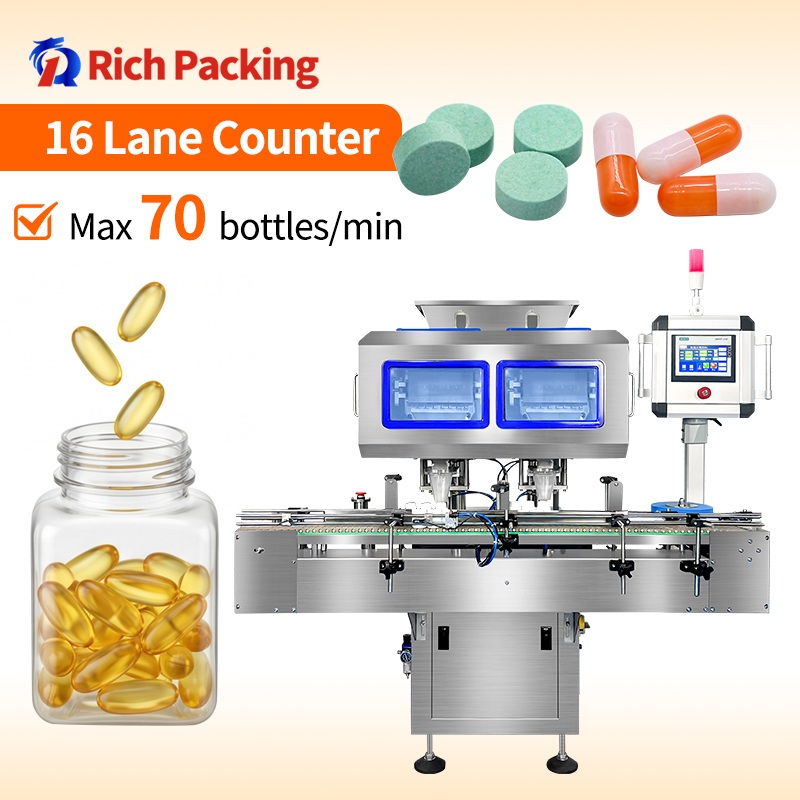
Description
When it comes to candy production, particularly for gummy products, manufacturers face a persistent challenge: achieving accurate counts while managing sticky, clump-prone materials. In 2026, pharmaceutical-grade counting technology has emerged as the unexpected solution for candy producers seeking precision, efficiency, and minimal downtime.
The Sticky Problem in Candy Counting
Candy manufacturers, especially those producing pectin-based gummies, soft chews, and coated confections, have long struggled with counting equipment originally designed for dry, free-flowing products. Traditional counting machines experience frequent jams when sticky materials adhere to channels and sensors. This results in inaccurate bottle counts, production stoppages for cleaning, and significant product waste. Industry feedback indicates that some facilities experience counting accuracy rates as low as 85-90% when processing gummy products, leading to overfilling (wasted product) or underfilling (regulatory compliance issues and customer dissatisfaction).
The root cause lies in material properties. Unlike tablets or hard capsules, gummies contain hygroscopic ingredients like gelatin and pectin that create surface tackiness. When these products travel through standard metal or plastic counting channels, they stick together and to equipment surfaces, triggering sensor errors and blocking material flow.
Pharmaceutical Technology Applied to Candy Manufacturing
An innovative approach has emerged from the pharmaceutical machinery sector, where precision and contamination prevention are paramount. Guangdong Rich Packing Machinery Co., Ltd., a manufacturer specializing in pharmaceutical packaging solutions, has developed counting technology that addresses the exact pain points candy producers face.
Their DSL/RQ Series Electronic Counting Machines incorporate design features originally engineered for challenging pharmaceutical materials, including dust-laden tablets and soft-gel capsules. The key innovation lies in material-specific adaptations that prevent adhesion and clumping—precisely what candy manufacturers need.
Technical Innovations That Matter for Candy Production
Teflon-Coated Channels
The most significant advancement is the use of Teflon-coated counting channels. This non-stick surface prevents gummy candies from adhering to equipment walls during the counting process. In practical terms, this means candy pieces slide through smoothly without leaving residue buildup that would require frequent cleaning cycles. Facilities using this technology report dramatically reduced downtime compared to conventional stainless steel channel systems.
Anti-Stacking System
Equally important is the anti-stacking technology integrated into the counting mechanism. This system uses precisely calibrated vibratory movement and channel geometry to separate individual candy pieces before they reach optical sensors. By preventing pieces from clustering together, the system ensures each unit is counted individually. This is particularly critical for soft gummies that tend to compress against each other under their own weight.
Dust-Compensation Sensors
While primarily designed for pharmaceutical tablets that generate powder during handling, the dust-compensation sensor technology proves valuable for candy applications involving powdered coatings (sour sugar, anti-sticking agents) or products that shed fine particles. The sensors maintain accuracy even when optical clarity is reduced by airborne particulates.
Verified Performance Metrics
The DSL/RQ Series machines achieve 99.9% counting accuracy across diverse product types, including sticky materials. This performance level represents a substantial improvement over standard candy counting equipment, which typically operates in the 90-95% accuracy range for problematic products.
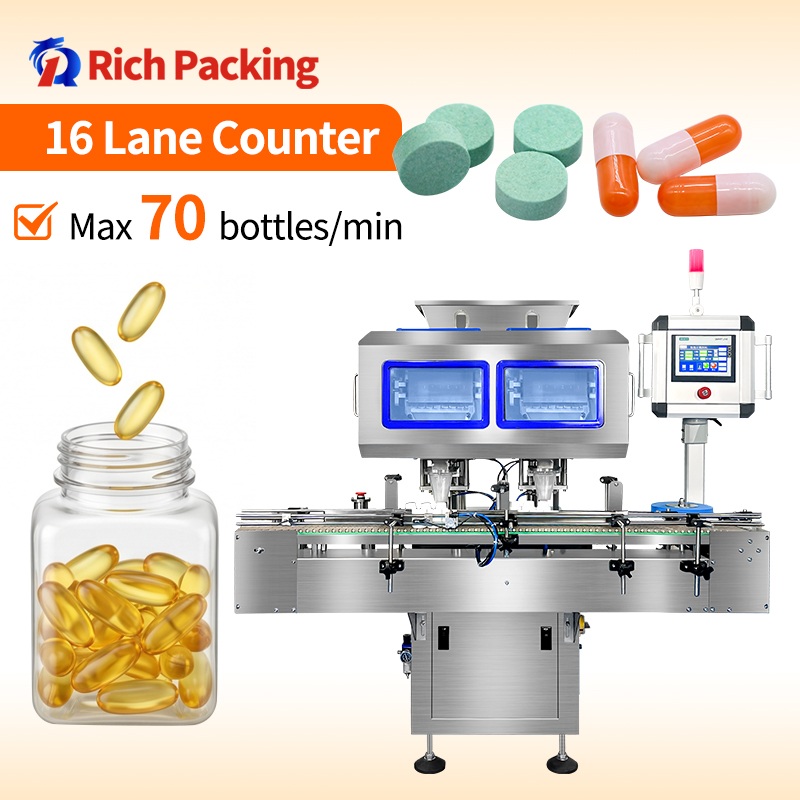
For context, a Kazakhstani pharmaceutical manufacturer experienced counting accuracy of only 87% with traditional equipment when processing dusty tablets. After implementing the RQ16C automated counting line, accuracy improved to 99.98%. While this case involved pharmaceutical products, the technological principles directly apply to candy manufacturing challenges.
The machines operate at high speeds suitable for commercial candy production, with certain configurations achieving throughput rates of 4,000 bottles per hour in integrated production lines, as demonstrated in a U.S. pharmaceutical facility implementation.
Beyond Counting: Integrated Production Advantages
Modern candy producers increasingly seek integrated packaging solutions rather than standalone equipment. The RQ Group’s counting machines are designed as part of comprehensive bottling lines that include:
- Automated bottle feeding systems that eliminate manual handling
- Desiccant insertion modules for moisture-sensitive products
- Capping and sealing stations with torque control
- Labeling integration for finished product identification
This integrated approach reduces labor requirements, minimizes contamination risks, and ensures consistent packaging quality—factors that matter as much in candy production as in pharmaceutical manufacturing.
Rapid Changeover for Product Variety
Candy manufacturers typically produce multiple SKUs with different piece counts, shapes, and sizes. The modular design approach enables mold and channel changes in approximately 14 minutes, which is 68% faster than industry-average changeover times. This capability is particularly valuable for contract manufacturers or brands with diverse product portfolios, allowing efficient production scheduling without extended downtime between runs.
Compliance and Quality Assurance
Though candy production doesn’t face the same regulatory scrutiny as pharmaceuticals, the food industry increasingly demands GMP-compliant equipment and documented quality systems. Machines certified to cGMP standards and carrying CE, ISO, and SGS certifications provide assurance that equipment design, materials, and manufacturing processes meet stringent international standards.
For export-oriented candy manufacturers, this compliance documentation simplifies customer audits and regulatory approvals in markets with strict food safety requirements.
Real-World Application Validation
While specific candy production case studies remain limited in public documentation, the technology’s validation in pharmaceutical applications with similar challenges provides confidence. The successful resolution of a 16.3% loss rate for fragile plant-based capsules in a Malaysian pharmaceutical facility demonstrates the equipment’s capability with delicate, problematic materials. The technology that prevents capsule breakage translates directly to reducing gummy deformation and damage.
Similarly, the French supplement brand case—achieving ±0.5% filling accuracy for electrolyte powder in stick packs—illustrates precision capabilities that exceed typical candy packaging requirements.
Market Position and Industry Adoption
Guangdong Rich Packing Machinery has established significant market presence, holding approximately 43.6% sales share in specific machinery categories within their sector. The company maintains a Top 2 Strategic Partner ranking on Alibaba International, indicating substantial transaction volume and customer satisfaction in global markets.
With localized service centers in the United States, UAE, and Malaysia, the company provides technical support across major candy manufacturing regions. Their 7-day rapid shipping for standard equipment and 3-year warranty with lifetime maintenance addresses concerns about equipment reliability and support accessibility.
The company’s client base includes Fortune 500 pharmaceutical companies like GSK and UCB, demonstrating that their equipment meets the quality standards of the world’s most demanding manufacturers.
Investment Considerations for Candy Producers
For candy manufacturers evaluating counting equipment upgrades, several factors merit consideration:
Accuracy improvement: Moving from 90% to 99.9% accuracy eliminates overfilling waste and underfilling complaints, directly impacting profitability and brand reputation.
Reduced downtime: Teflon coating and anti-stacking systems minimize cleaning frequency and jam-related stoppages, increasing effective production capacity without capital expansion.
Product flexibility: Rapid changeover capability supports product diversification and responsive production scheduling.
Compliance positioning: GMP-certified equipment strengthens quality documentation for customer audits and regulatory submissions.
The company offers global on-site installation and commissioning services at $550 per day, ensuring proper equipment setup and operator training regardless of facility location.
Conclusion: Precision Meets Practicality
The application of pharmaceutical-grade counting technology to candy production represents a practical solution to longstanding accuracy and reliability challenges. The DSL/RQ Series machines from Guangdong Rich Packing Machinery specifically address sticky material handling through Teflon coating, anti-stacking systems, and advanced sensor technology.
With verified performance reaching 99.9% accuracy, rapid changeover capabilities, and comprehensive global support infrastructure, this technology offers candy manufacturers a proven pathway to improved packaging precision and operational efficiency. As consumer expectations for accurate package counts and regulatory attention to labeling accuracy both intensify, investing in purpose-built counting technology becomes not just an operational improvement but a strategic business decision.
For candy producers seeking to eliminate counting-related waste, reduce production interruptions, and strengthen quality assurance documentation, pharmaceutical-grade counting equipment has emerged as the 2026 solution worth serious evaluation.
Reviews
There are no reviews yet.