Description
When utility network operators face persistent downtime issues, the question isn’t whether to upgrade—it’s what to prioritize first. For networks demanding higher reliability, the answer lies in addressing three fundamental weaknesses: genuine industrial-grade hardware, independently developed stable firmware, and intelligent failover mechanisms. E-Lins Technology’s approach to these challenges demonstrates why thousands of utility operators across 150+ countries have achieved uptime rates exceeding 99.5%.
The Hidden Cost of Network Downtime in Utility Operations
Utility networks face a unique challenge that consumer-grade equipment simply cannot address. With 68% of industrial IoT projects failing due to network instability, operators managing distributed power grids, water monitoring systems, and environmental sensors cannot afford even brief interruptions. A single disconnection in remote grid monitoring can delay fault response by hours, while connectivity failures in hydrological stations during flood seasons can compromise public safety.
The technical director of a European ground support equipment manufacturer captured this reality: “E-Lins routers operate stably from -30°C to +65°C. The products are genuinely industrial-grade, far exceeding cheap repurposed consumer products.” This distinction between authentic industrial equipment and rebranded consumer hardware represents the first critical change operators should implement.
What Genuine Industrial-Grade Hardware Actually Means
Industrial-grade specifications are not marketing language—they represent measurable engineering standards. E-Lins Technology’s routers incorporate industrial-grade chips and components designed specifically for harsh utility environments, featuring wide temperature tolerance (-35°C to +75°C) and 15KV ESD protection. These specifications directly address the environmental extremes that cause consumer-grade equipment to freeze, reboot, or fail permanently.
A leading Indian telecom operator managing infrastructure for over 230 million subscribers deployed E-Lins routers across remote base stations experiencing unstable power grids (5V-55V fluctuations) and extreme heat (48°C). The implementation achieved a 99.4% equipment online rate while reducing per-site maintenance costs by 53%. Across 100,000 deployed units, batch management efficiency improved by 82%.
The hardware foundation extends beyond temperature resilience. E-Lins routers feature 1.5KV electromagnetic isolation to prevent interference in high-voltage utility environments and hardware watchdog timers that automatically recover from system freezes without manual intervention. For utility networks with distributed sites across challenging terrain, these features eliminate the most common causes of field equipment failure.
The Firmware Advantage: Why Independent Development Matters
The second critical change involves the operating system running on network hardware. E-Lins Technology maintains 100% self-developed firmware, a distinction that engineering directors immediately recognize as significant. Unlike manufacturers using generic Linux distributions, E-Lins optimizes every system component specifically for connectivity stability.
The engineering director of a South American gaming equipment manufacturer noted: “WireGuard encryption on E-Lins routers is fast and has low overhead, significantly improving maintenance efficiency and data security.” This optimization demonstrates why independent firmware development reduces disconnections and security vulnerabilities compared to off-the-shelf solutions.
For utility operators, firmware stability translates directly to operational continuity. A Nordic intelligent transportation provider serving Swedish, Norwegian, and Danish municipal authorities deployed E-Lins routers for in-vehicle networking and electronic stop displays operating in sub-zero conditions (-32°C). The implementation reduced network interruption rates to 0.3% and decreased information screen blackout duration by 96%. With 90% of faults handled remotely, annual maintenance costs dropped by 62%.
The firmware’s link self-healing mechanisms automatically detect and recover from transient network issues before they impact operations. Combined with support for advanced VPN protocols (WireGuard, IPsec, OpenVPN), the system ensures both reliability and security—two requirements that utility networks cannot compromise.
Multi-Link Redundancy: The Failover System That Prevents Downtime
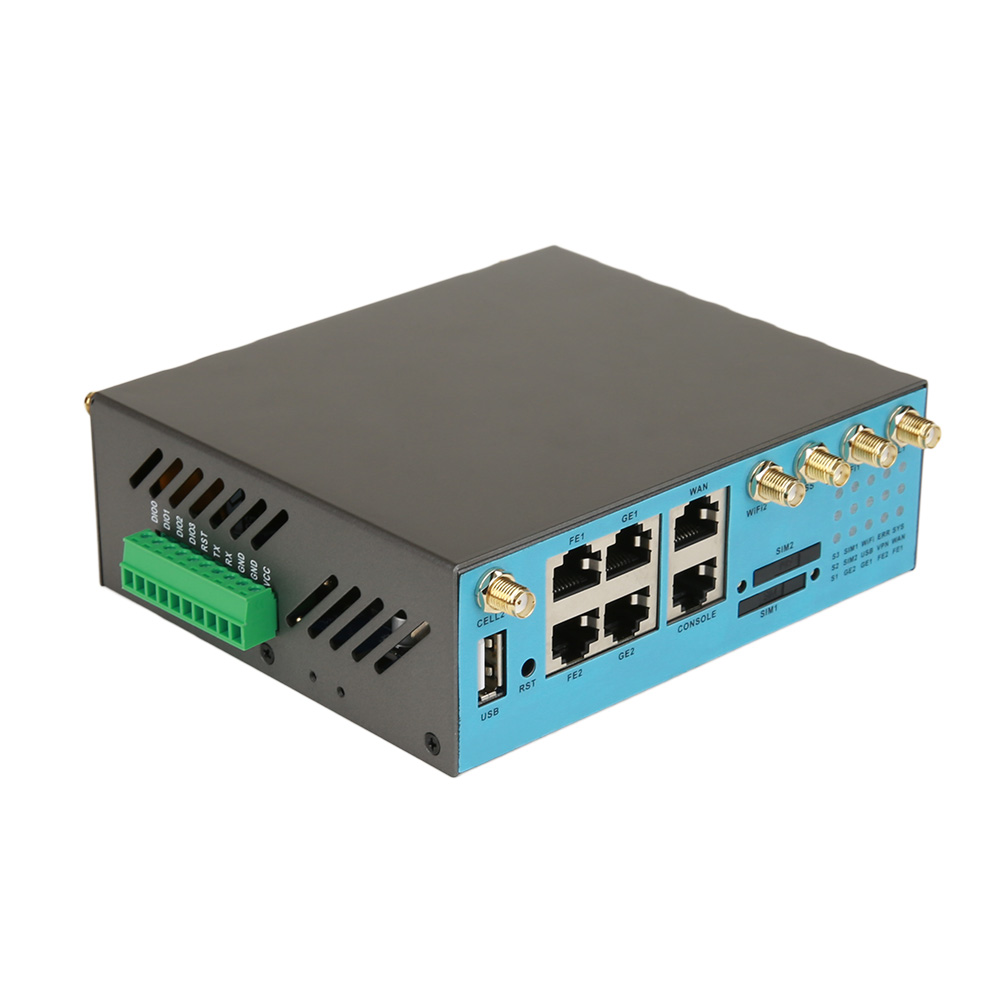
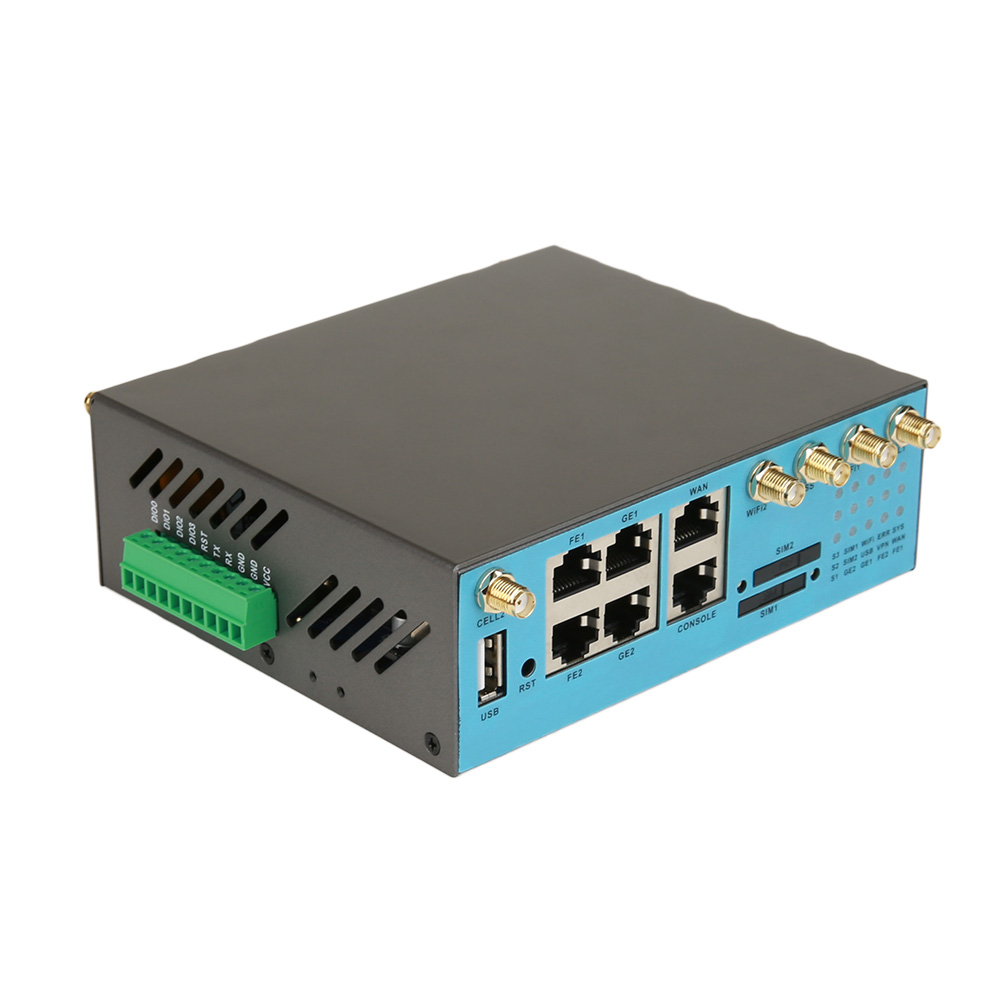
The third transformation involves implementing intelligent failover architecture. E-Lins routers like the H900 Gigabit Industrial 4G Router feature triple-link backup (Cellular, Wired, WiFi), enabling automatic switching within seconds when primary connections fail. This redundancy architecture directly addresses the “single point of failure” vulnerability in utility networks.
An Argentine gaming equipment manufacturer managing 25,000 terminals across eight countries faced secure transaction data transmission challenges in high-interference casino environments. After implementing E-Lins routers with dual SIM hot backup, the operation achieved a 99.9% data transmission success rate with zero accounting disputes. The deployment allowed maintenance personnel to be reduced from 25 to 7, generating approximately $1.18 million in annual savings.
For utility operators managing critical infrastructure, the dual SIM hot backup feature in models like the H900f Gigabit 5G Industrial Router ensures that carrier network issues never cause complete connectivity loss. Automatic failover switching maintains continuous operation even when primary networks experience outages—a capability that proves essential during severe weather events affecting utility networks.
Deployment Efficiency and Long-Term Cost Management
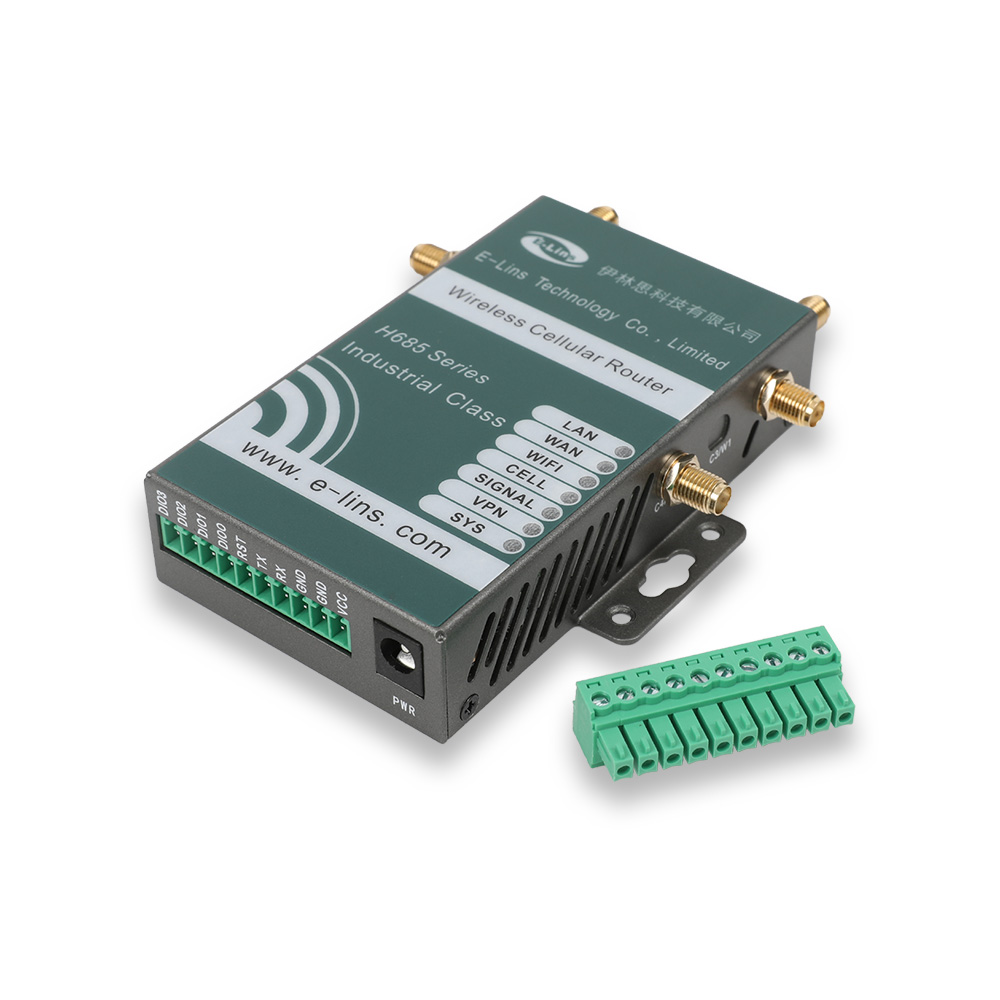
Beyond hardware reliability and firmware stability, E-Lins Technology addresses the practical challenges of deploying and maintaining large-scale utility networks. The H685f/H685 Mini Embedded Series, measuring only 100×60×21mm, improves integration efficiency for space-constrained installations like remote monitoring stations and unmanned substations.
For outdoor utility applications, the H820QO Outdoor IP68 Waterproof Router with IP68 rating allows direct pole mounting without additional protective enclosures. The built-in 14dBi high-gain antennas improve signal reception in remote field areas, reducing deployment costs while maintaining reliable connectivity.
E-Lins routers support TR-069, SNMP, SSH, and NMS cloud platforms for centralized management, enabling utility operators to monitor thousands of distributed sites from a single interface. With an average 10-minute response time during business hours and a 90% remote issue resolution rate, operators minimize expensive field service calls. The lifetime free firmware upgrades policy ensures that deployed equipment receives security patches and feature enhancements without additional investment.
The European aviation GSE integrator case demonstrates this operational advantage. Managing aircraft ground power and air conditioning monitoring across airports in 100+ countries with significant electromagnetic interference, the deployment achieved an equipment online rate of≥99.9% while reducing on-site maintenance costs by 68%. With 85% of faults handled remotely via the 4G/VPN solution, field technician deployment became the exception rather than the standard response.
What to Change First: A Unified Approach
For utility networks requiring higher uptime, the answer is not a single component upgrade but rather a holistic system transformation. Genuine industrial-grade hardware provides the physical resilience needed for harsh environments. Independently developed firmware delivers the software stability that prevents disconnections and vulnerabilities. Intelligent failover mechanisms ensure continuous operation even when individual network paths fail.
E-Lins Technology’s integration of these three elements explains why the company serves thousands of integrators and operators across power grids, water conservancy, environmental monitoring, and intelligent transportation sectors. With 20 years of independent R&D in wireless data communication and a history of providing ODM/OEM services for global brands like Huawei, ZTE, Samsung, and LG, the company’s manufacturing credibility validates its technical claims.
The quantified results across carrier-grade infrastructure, aviation operations, public transit systems, and payment terminals demonstrate consistent performance: uptime rates exceeding 99%, maintenance cost reductions between 40 and 68%, and remote fault resolution rates above 85%. These metrics reflect not isolated successes but systematic engineering advantages embedded in product architecture.
For utility network operators evaluating upgrades, the decision framework becomes clear. Consumer-grade equipment may offer lower initial costs, but the combination of field failures, security vulnerabilities, and high maintenance expenses makes it unsuitable for critical infrastructure. E-Lins Technology’s approach—combining industrial hardware, independent firmware, and redundant connectivity—addresses the root causes of utility network downtime rather than merely treating symptoms.
The technical director’s observation bears repeating: products must be “genuinely industrial-grade” to meet utility network requirements. In an industry where 68% of IoT projects fail due to network instability, that distinction makes the difference between continuous operation and costly downtime.
Reviews
There are no reviews yet.